

All about Lapsang Souchong black tea

The birthplace and history of Lapsang Souchong
Lapsang Souchong comes from Tongmu in the Wuyi Mountains of Fujian, a place closely associated with the beginnings of black tea. Zheng Shan Tang’s family history traces its creation to the Jiang family in the late Ming period, around 1568. Its story spans more than four centuries of tea making.
Jiangdun and Miaowan, in the Tongmu area of Xingcun, are central to that story. Generations of the Jiang family worked in tea, and the tea expert Zhang Tianfu inscribed the words “The Origin of Lapsang Souchong” for Miaowan. The mountain landscape, family workshops and inherited craft remain part of the tea’s identity.
As black-tea making spread, different regions developed their own styles, including Chinese gongfu black teas and the black teas of India and Sri Lanka. Their individual histories and raw materials should be understood alongside Wuyi’s early influence.
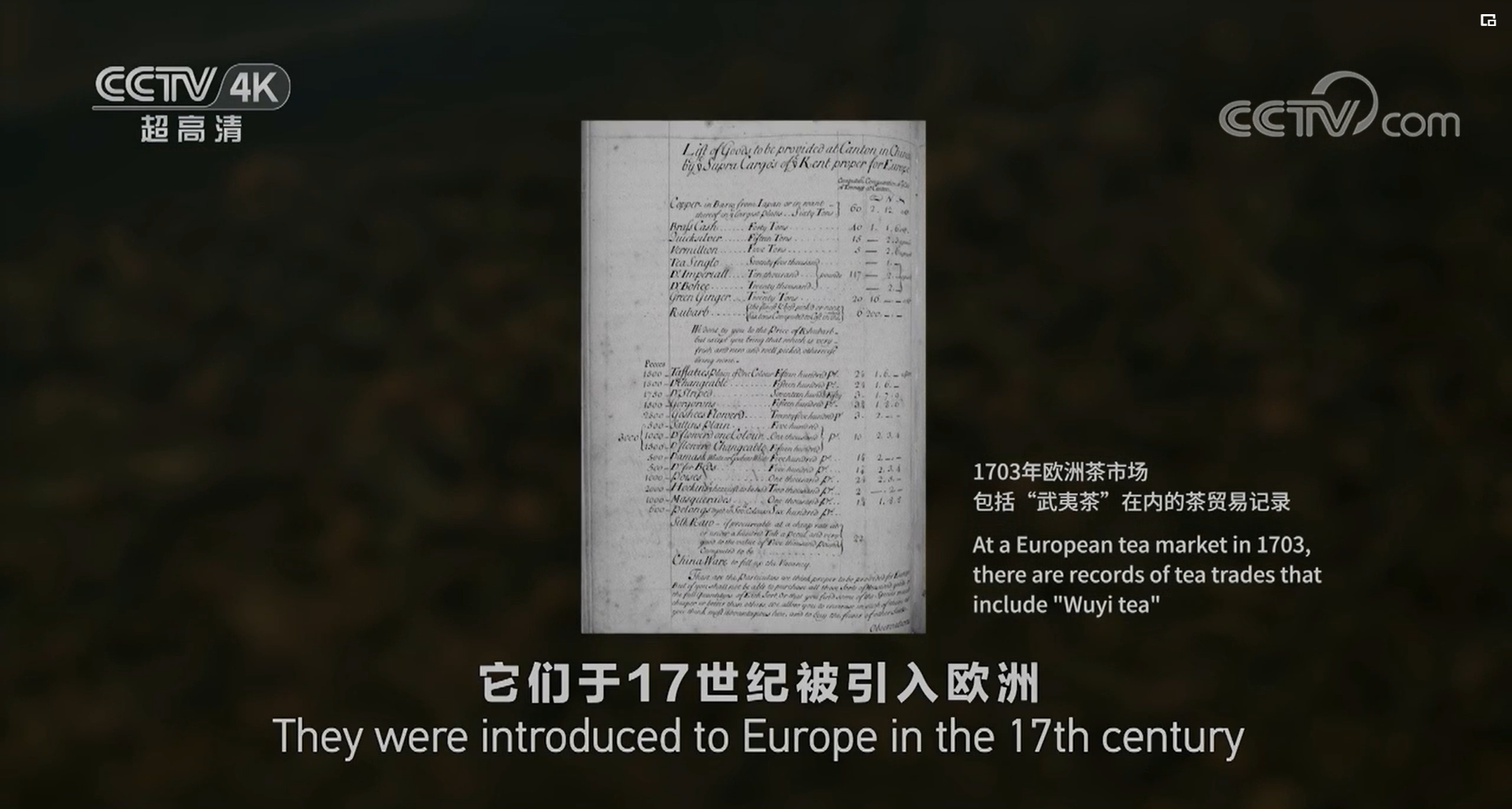

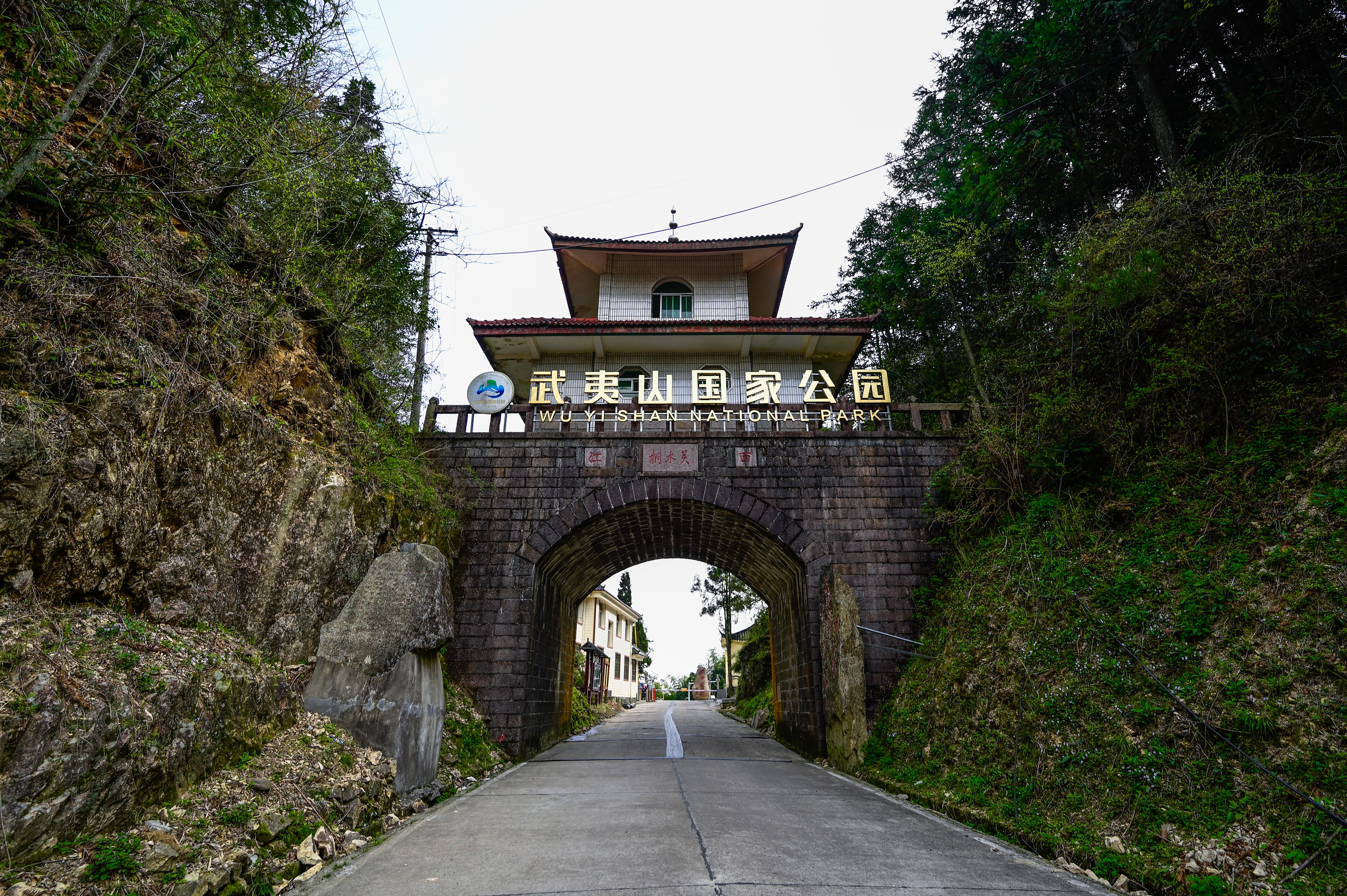
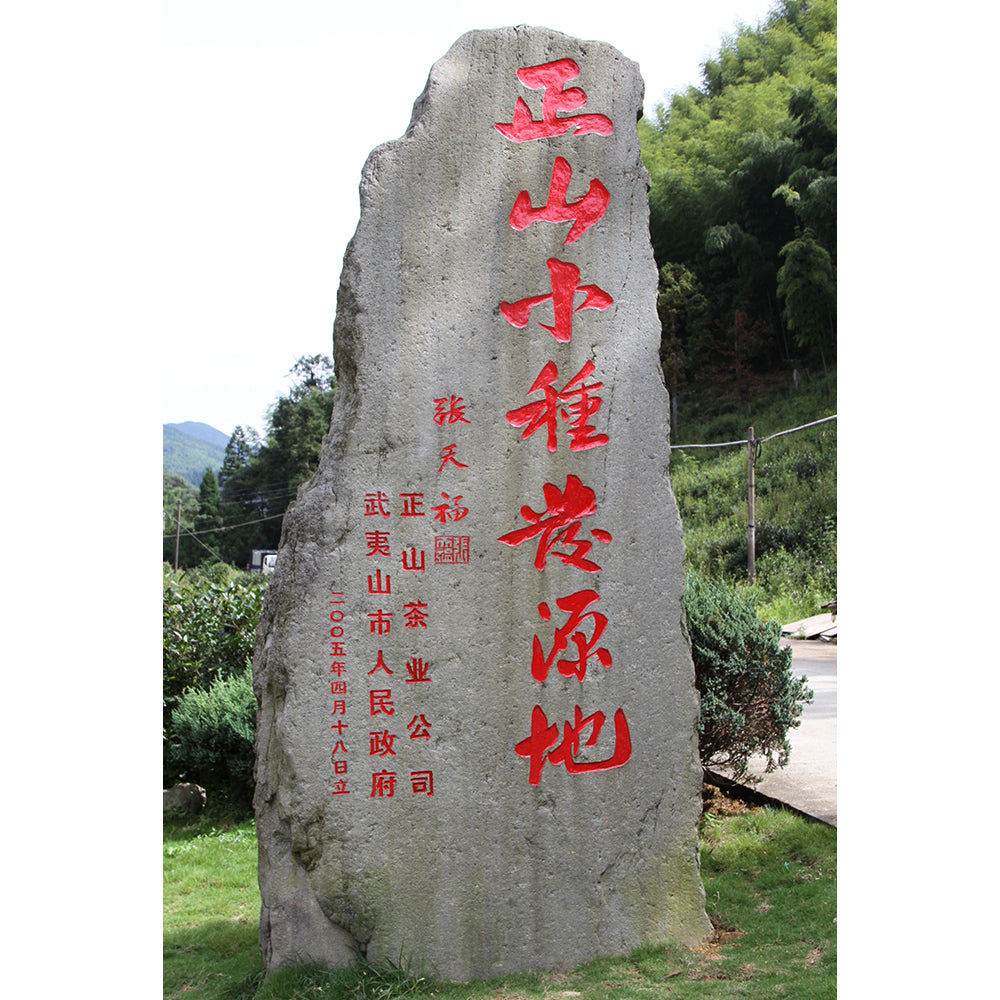
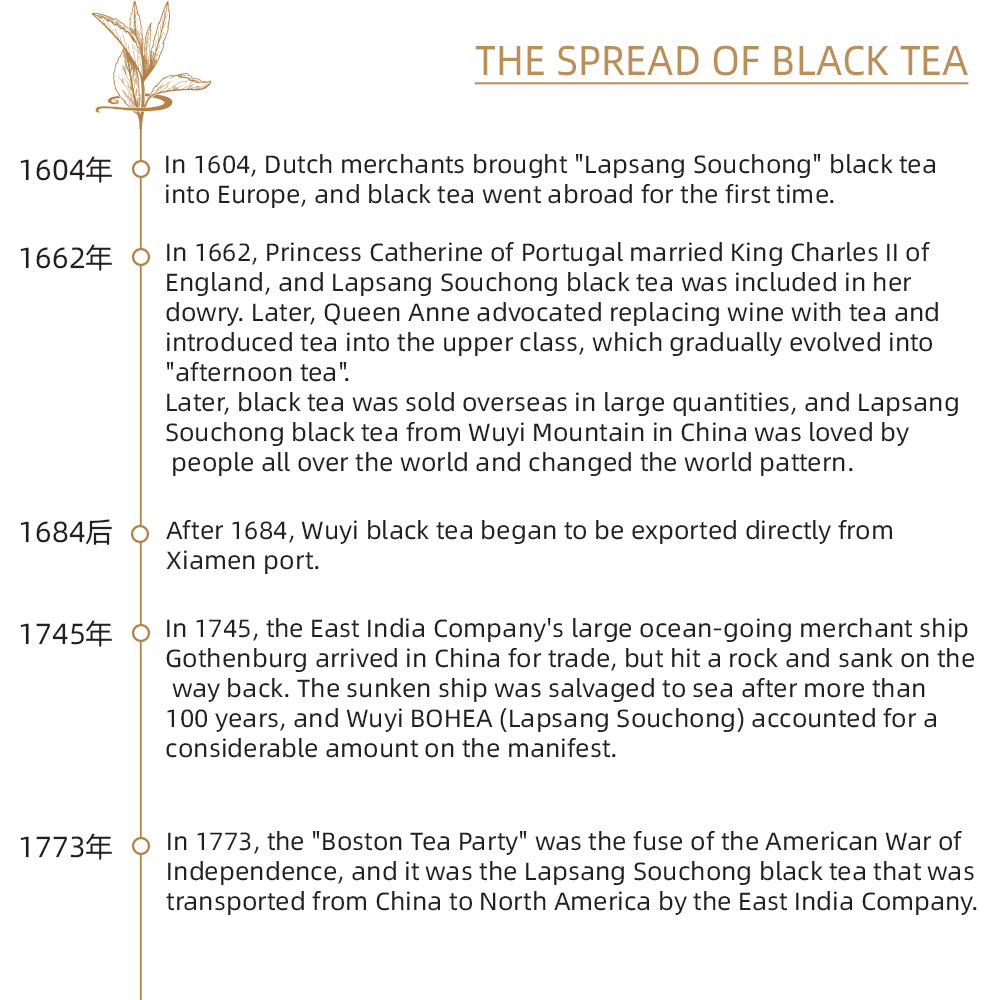
From Wuyi to the wider world
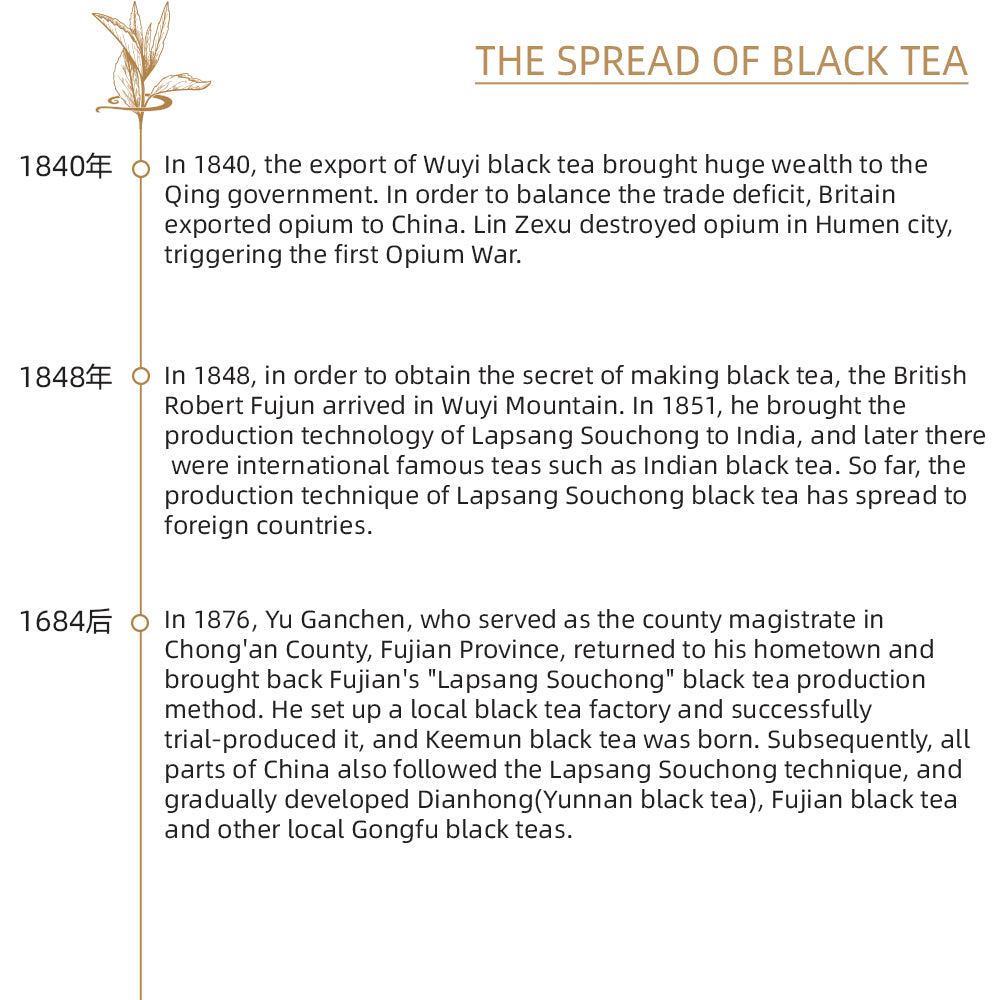
The story of Lapsang Souchong also follows the trade routes that carried Chinese tea overseas. These milestones connect the tea’s local heritage with the wider history of tea drinking.
- Around 1604 Zheng Shan Tang’s historical account places the early overseas journey of Lapsang Souchong around the beginning of the seventeenth century, carried by Dutch traders.
- 1662 Catherine of Braganza married Charles II. Her tea-drinking habits helped make tea fashionable at the British court and among the aristocracy.
- 1684–1689 The opening of maritime customs in Fujian strengthened Xiamen’s trading role. A Fujian historical account records direct British purchases of Wuyi black tea through Xiamen in 1689.
- 1744–1745 The Swedish ship Götheborg reached China in 1744 and was wrecked near its home port in 1745 with tea, silk and porcelain aboard. Its cargo reflects the scale of the China trade.
- 1773 Bohea black tea was among the Chinese teas destroyed in the Boston Tea Party. Bohea was a historical Wuyi trade name, rather than an exact label for every modern Lapsang Souchong style.
- 1839–1842 Tea was part of the wider trade imbalance between Britain and China surrounding the First Opium War. Its history cannot be reduced to one tea or one event.
- 1875–1876 Black-tea making developed in Anhui through the work of tea makers including Yu Ganchen and Hu Yuanlong. Qimen black tea became one of China’s important regional gongfu styles.
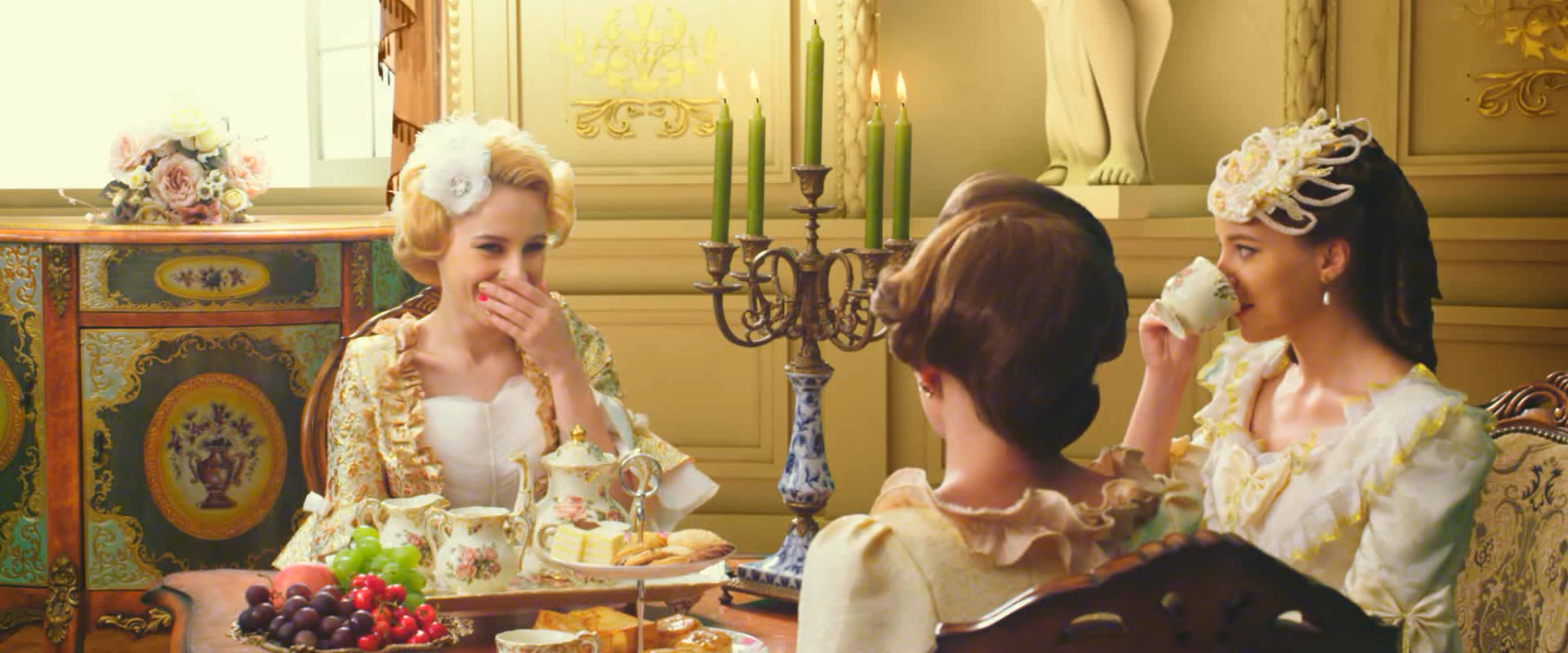
Afternoon tea culture
Tea had long been enjoyed in China before it became fashionable in Europe. From the seventeenth century, tea drinking spread through British court and social life. Over time, new ways of serving tea, sharing food and welcoming guests developed around it.
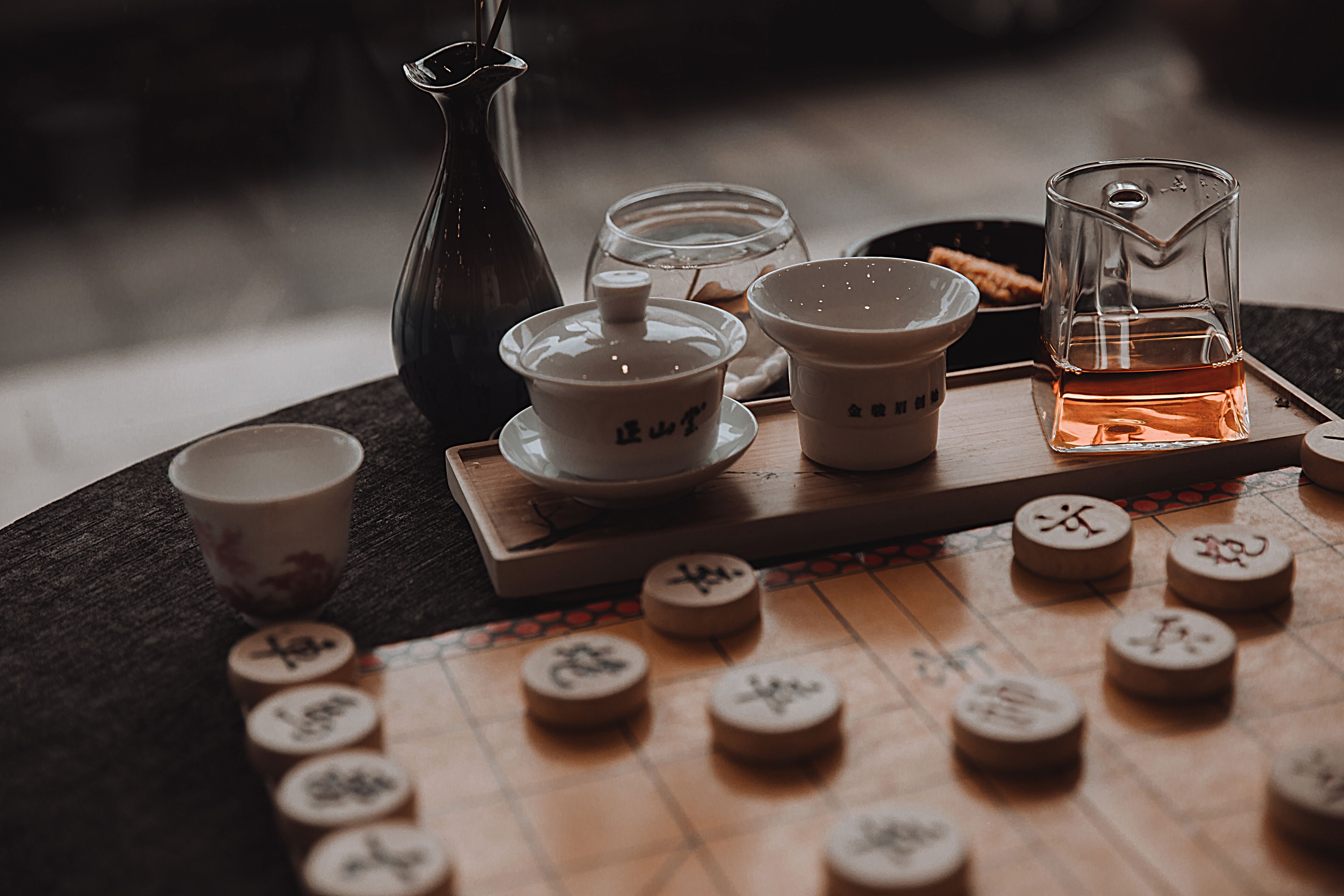
Today, Lapsang Souchong can be enjoyed in a small gaiwan, a teapot or an afternoon tea setting. The setting may change, while the pleasure of noticing the tea’s aroma and sharing a cup remains.
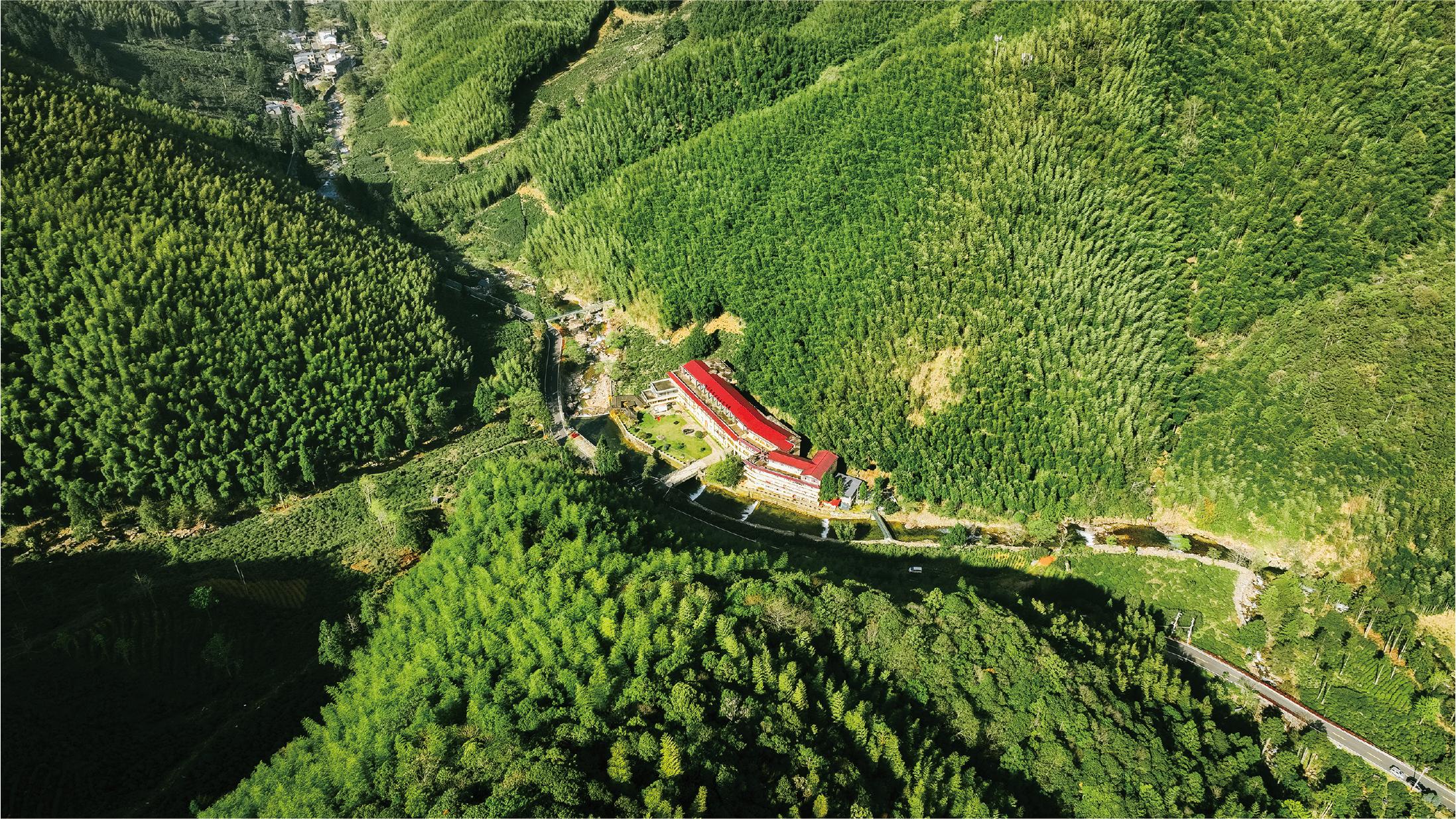
The growing region of Lapsang Souchong
Tongmu lies in the mountainous Wuyishan area, with wooded slopes, deep valleys, streams and a humid climate. A traditional regional description centres on Miaowan and Jiangdun, extending north towards Shilong in Jiangxi, south towards Caodun and Baiyeping, east towards Da’an, west towards Siqian and Gankeng, and southwest towards Guanyinkeng. A Wuyishan National Park article describes this wider area as approximately 600 km².
Six features help describe this mountain environment:
- Elevation A reference range of about 800–1,500 m, with differences in temperature and growing conditions between sites.
- Temperature A regional annual average of around 18°C in a humid subtropical monsoon setting.
- Rainfall A reference annual rainfall of more than 2,000 mm.
- Humidity Relative humidity around 85%, with frequent mist and cloud.
- Soil Acidic mountain soils, with a reference pH of 4.5–5 and soil depth of about 30–90 cm.
- Forest A regional reference figure of 96.3% forest cover illustrates the wooded landscape surrounding the tea gardens.
These are regional reference descriptions, not current measurements for each garden or guarantees about every tea. Conditions vary with elevation, site and season; read the stated origin of the particular product you choose.

1. Picking
The traditional smoked style begins with small-leaf tea plants and a picking standard commonly described as one bud with two or three leaves. Tea makers select suitable leaves and weather conditions for the season’s production.
The following seven stages introduce the traditional smoked Lapsang Souchong process. Individual producers and tea styles may adapt the details.

2. Withering
Fresh leaves are spread out so that they gradually lose moisture and become softer. During Tongmu’s rainy tea-making season, warmth in the traditional Qinglou wooden workshop helps tea makers manage indoor withering.
Airflow, leaf thickness and warmth are adjusted to the condition of the fresh leaves, preparing them for rolling.

3. Rolling
Rolling shapes the softened leaves into tighter strands and breaks some of the leaf tissue, bringing tea juices to the surface. Hand rolling forms part of the traditional story; machines are also used in contemporary production.
This stage prepares the leaves for the changes in colour and aroma that follow.

4. Oxidation, traditionally called fermentation
The rolled leaves are allowed to develop under controlled warmth and humidity. In the traditional method shown here, leaves may be placed in bamboo baskets and covered with cloth to help retain suitable conditions.
Tea makers call this stage fermentation; in black-tea making, it mainly involves enzymatic oxidation. The green leaf colour changes towards copper-red as aroma develops.

5. The traditional hot-pan stage
In this distinctive stage of the traditional process, the oxidised leaves are briefly worked in a heated iron pan. The heat reduces enzyme activity and helps hold the colour and aroma already developed.
The tea maker controls the heat and movement carefully before the leaves are shaped again.

6. Re-rolling
After the hot-pan stage, the leaves are rolled again to tighten strands that have loosened. Re-rolling refines the shape and prepares the tea for the final drying stage.

7. Pine-smoke drying
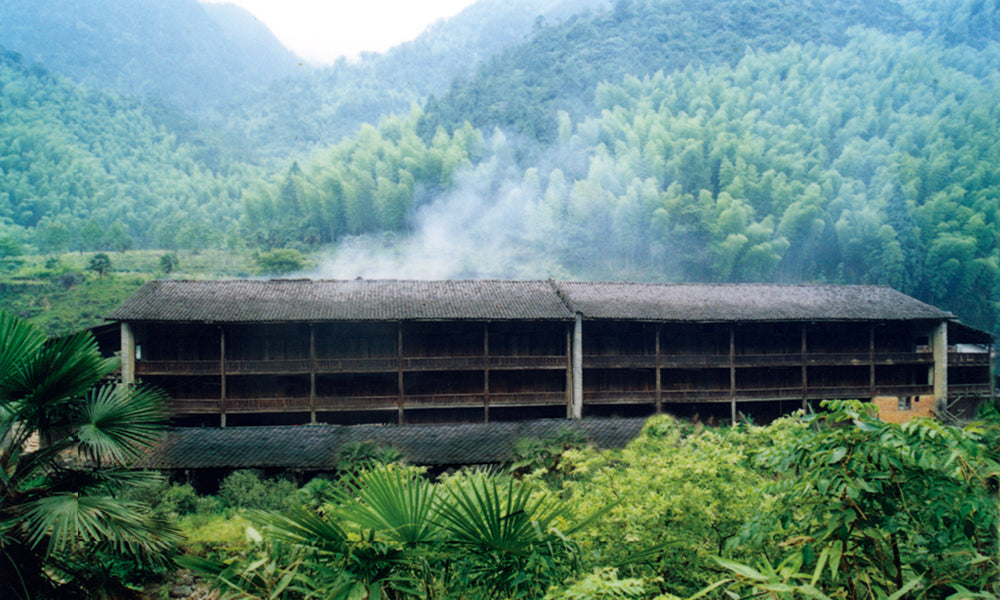
The re-rolled leaves are spread on bamboo sieves and placed on racks in the Qinglou workshop. Pinewood burns in a separate fire chamber, sending warmth and smoke through channels into the building.
As the tea dries, it absorbs the distinctive pine-smoke character associated with traditional smoked Lapsang Souchong. The result depends on the leaves, heat, smoke and the tea maker’s handling.

Recognising the tea in your cup
Discover a traditional smoked style through its appearance, liquor, flavour and infused leaves. Compare these details together, and allow for differences between products.
Dry leaf
Tightly shaped strands with dark, lustrous tones; a traditional smoked tea may show pine-smoke and dried-fruit aromas.

Liquor
Often orange-red, bright and clear. Observe its colour and clarity as you brew, rather than using colour alone to judge quality.

Flavour
A rounded, smooth cup with the characteristic association of pine smoke and longan-like dried fruit. Taste it plain first; milk or sugar can be explored according to the tea and your preference.

Infused leaf
The leaves soften and open, often showing coppery or bronze-red tones.

Storage
Across infusions The aroma and strength change as you brew. Adjust steeping time to what you taste instead of expecting a fixed number of identical cups.
Keep tea sealed, dry and away from light and strong odours. Follow the best-before and storage instructions on the pack; careful storage matters more than a general promise that all tea improves with age.
Qinglou: the traditional wooden tea workshop
In Tongmu tea making, Qinglou is the name of a traditional wooden workshop used for withering, drying and smoking tea. Its layered construction makes use of rising warmth and smoke.
- Fire chamber and channels Pinewood is burned below or beside the working floors, and heat and smoke are directed through the workshop.
- Drying floor Round bamboo sieves holding tea are placed on racks for smoke drying.
- Buffer layer Opening and closing the wooden doors helps the tea maker adjust the movement of warmth.
- Upper withering floor Fresh leaves are spread out, using the gentler rising heat for withering.
These wooden workshops embody the practical knowledge passed down through Tongmu tea-making families, with repairs and improvements made over time.
How the pine-smoke aroma develops
In the traditional smoked process, pinewood supplies both warmth and smoke. The leaves take on this aromatic character during withering and especially smoke drying, giving the finished tea its familiar pine-smoke and dried-longan associations.
The selection below includes different smoking levels as well as non-smoked styles. They share a connection to the Lapsang Souchong tradition, while offering different expressions of aroma and flavour. Read each product’s own description to choose the style you enjoy.
Traditional pine-smoke craft
Watch how Lapsang Souchong is traditionally made.


