ZHENG SHAN TANG TEA GUIDE
Jin Jun Mei
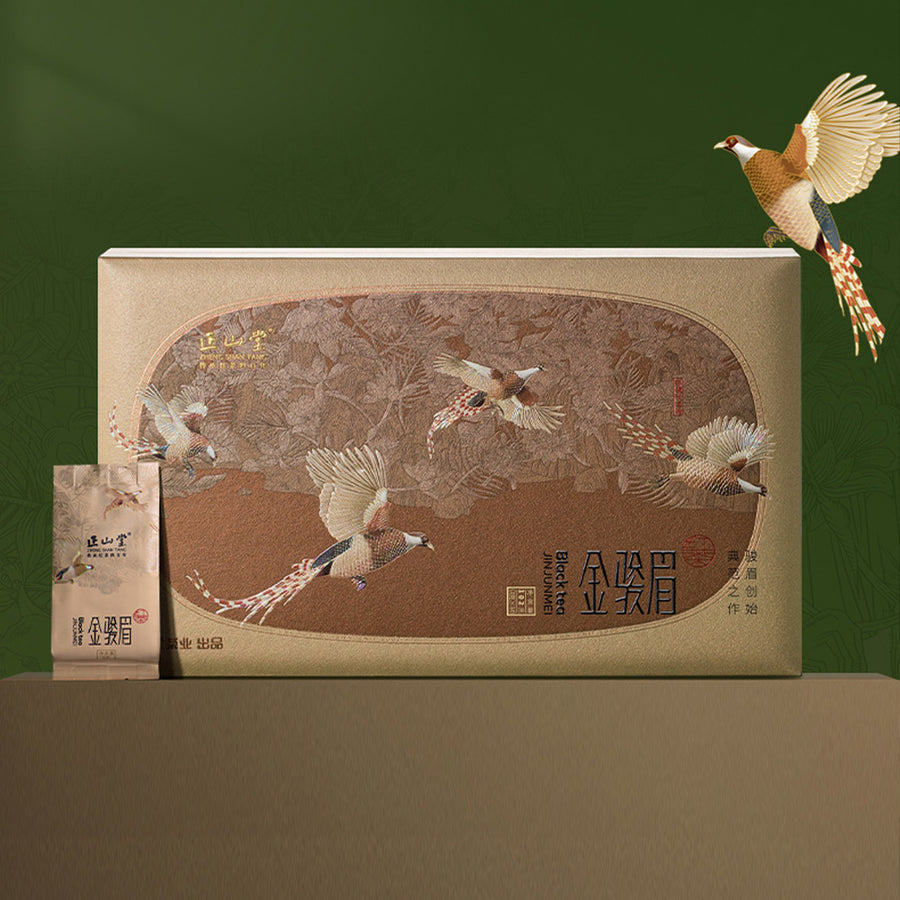
Discover the bud-only black tea created by Zheng Shan Tang’s team in 2005. Explore its Tongmu origins, distinctive craft and the details that matter when choosing a tea.


Small buds, a distinct black tea
Jin Jun Mei is a Chinese black tea associated with Tongmu in Wuyishan, northern Fujian. Zheng Shan Tang’s Tongmu Jin Jun Mei uses tea buds rather than a conventional bud-and-leaf picking. The small, slender buds are processed as black tea through withering, rolling, oxidation and drying.
The name identifies a finished tea, not a single tea-tree cultivar. Its delicate appearance should not obscure the work behind it: the raw material, growing place and handling all help shape the cup. It is black tea even when the liquor is golden rather than dark red.

Our 2005 innovation
In Zheng Shan Tang’s account of its history, founder Jiang Yuanxun led the team that developed Jin Jun Mei in Tongmu in 2005. The team drew on the local tradition of Lapsang Souchong and explored a different expression of black tea using buds.
Jin Jun Mei brings inherited skill and a new approach to raw material together. Its modern creation forms a new chapter in Tongmu’s centuries-old black-tea tradition. For customers, that history offers a way into the cup: discover how careful handling of small buds gives a familiar tea family a distinctive expression.


Tongmu is a specific origin
Tongmu is a particular place within the Wuyishan area of Fujian. Its forested mountain setting is part of the background to Zheng Shan Tang’s Tongmu Jin Jun Mei. Following the place name from Fujian to Wuyishan and then Tongmu helps you understand the tea’s home.
When choosing a tea, bring three details together: its stated origin, the buds or leaves selected, and the producer’s description of the finished style. These clues connect a landscape to a particular cup and give you useful points to compare as you explore different teas.

From fresh bud to finished tea
- Select the buds: begin with the picking specification for this bud-only style.
- Wither: allow controlled moisture loss so the buds become suitable for the next stage.
- Roll: shape the material and prepare it for further transformation.
- Oxidize: manage the changes that develop the black-tea character.
- Dry: reduce moisture and stabilize the finished style.
- Sort and pack: finish the tea and protect it for storage.
This outline introduces the main stages, not a recipe with universal times or temperatures. Tea makers work with the condition of the material. Small changes in handling can affect aroma, texture and balance.
Look, smell and taste together
- Dry buds: the brand describes slender, compact leaves with gold, yellow and dark tones, with dark material prominent.
- Liquor and aroma: the intended style is a clear golden liquor, with floral, fruity and honey-like notes. These words describe a tasting impression, not an ingredient list.
- Texture and finish: notice freshness, sweetness, smoothness and the way the finish develops as the cup cools.
Use these descriptions as a starting point for your own tasting. Compare the dry tea, the first warm cup and later infusions. Notice how water, vessel, leaf quantity and infusion time influence the aroma and texture you enjoy.


Three names worth keeping separate
- Jin Jun Mei: the bud-only black tea developed in Tongmu that this guide introduces.
- Lapsang Souchong: the local black-tea tradition from which that innovation grew, offering smoky and non-smoky expressions with their own character.
- Junmei China: Zheng Shan Tang’s wider regional black-tea programme, which applies its craft across different producing areas. Those teas carry their own origins and raw-material specifications.
Begin with the style that interests you, then compare the individual tea’s origin, picking and tasting notes. Exploring these related names side by side is a useful way to discover the range within Chinese black tea.

Brew Jin Jun Mei with confidence
A gaiwan or small teapot makes it easy to pour the tea off fully. The following is a starting point adapted from our original guide; use the instructions on your particular tea and adjust for your vessel and taste.
- Tea and waterWarm the vessel, then use 3–5 g of tea and fresh water at 95–100°C.
- First infusionsPour off promptly for the first few infusions, rather than leaving the leaves to soak.
- Later infusionsTry 5–10 seconds as the liquor lightens, then around 15 seconds or longer as needed. The change in the cup matters more than a fixed infusion count.
- Keep the aromaTaste it plain first. After use, seal the remaining dry tea and store it away from moisture, light and strong odors.
The classic tin and its identifying details
The classic metal tin shown here is part of Zheng Shan Tang’s packaging heritage. Its rigid, light-blocking body helps protect the tea during handling; the inner seal and dry storage also matter after purchase.
The original illustration highlights details such as the origin label, QR label and branded seals. Use it to understand this packaging example, rather than as a checklist for every pack. Packaging and traceability labels change: Zheng Shan Tang introduced a new traceability label in April 2024. Check the markings on your actual pack and contact us with your order details and clear photos if you need help.

Meet Jin Jun Mei
The original brand video introduces Jin Jun Mei and its floral, fruity and honey-like aromas.
Jin Jun Mei: the 2026 release
Watch our original 2026 Jin Jun Mei release video.
Life of Tea
A brand film offering a wider view of life with tea, alongside the product introductions above.
Questions, answered
Is Jin Jun Mei a black tea or an oolong?
It is a black tea. Wuyi rock tea is an oolong from the same broader Wuyishan area, but the two have different raw-material choices and processing. Golden liquor does not turn Jin Jun Mei into a green or oolong tea.
Should Jin Jun Mei taste smoky?
The Jin Jun Mei style described here emphasizes floral, fruity and honey-like aromas rather than pine smoke. Its link to Lapsang Souchong is a connection of origin and craft; do not assume the two will taste the same.
Does authentic Jin Jun Mei have to be completely golden?
No. Zheng Shan Tang describes its tea as having gold, yellow and dark tones, with dark material prominent. Appearance alone cannot authenticate a product. Check its producer, origin and product information rather than relying on a single color rule.
Are all Junmei China teas Tongmu Jin Jun Mei?
No. Junmei China includes regional black teas with their own producing areas and picking specifications. Shared Junmei processing does not make their geographical origin the same. Read each tea’s individual description.