



Product details
Introduction
Sourced from the Wuyi rock tea growing region, tea bushes thrive in high‑elevation rocky valleys of Wuyi Mountain. Secluded springs flow through rugged peaks and gullies, allowing the tea plants to grow naturally and preserve an authentic, pure flavour. The high‑altitude terrain and ideal soil nurture rich internal substances within Wuyi rock tea, lending it an intense aromatic profile.
Tender young shoots are plucked and carefully crafted following time‑honoured traditional rock tea craftsmanship. The finished tea embodies the signature “rock bone with floral fragrance”. It delivers a mellow taste with prominent orchid notes and excellent brew resistance.
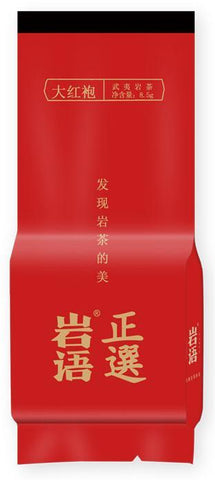
The packaging features a classic tea certificate design, paying homage to the inheritance and evolution of tea culture. Historically, tea certificates were official trade permits obtained by ancient tea merchants after paying tea taxes. This tea takes its name from these documents, symbolising great value for money.
This Da Hong Pao is a lightly roasted Wuyi rock tea. It yields a smooth infusion with lingering aroma on the palate and rich, distinct floral‑fruity notes — a tea well worth repurchasing.
Taste
Dry Leaf: Robust, tightly twisted leaves with curled tips and a glossy dark brown hue
Liquor: Bright orange.
Aroma: Rich orchid fragrance
Taste: Mellow and sweet with a noticeable lingering sweet aftertaste
Wet Leaf: Plump, supple and fully unfurled with a fresh, vibrant colour
Storage method: Sealed and placed at room temperature, cool, dry, no peculiar smell, dark place.
Product Info
Net weight: 50 Gram / 1.76 Ounce
Type: Rock Tea/Oolong Tea
Picking standard: 1 bud 3-4 leaves
Origin: Wuyi mountain from Fujian Province.
Grade: Top Grade.
How to brew
It is advisable to use a Gaiwan for brewing.
1. Add 8g of tea after warming the cup and smell the tea aroma
2. Add 100℃ water to brew
3.1-3 courses are fast rushing out,4-6 courses are extended for 5-15s, and about 8 courses can be brewed.
Comparison of Da Hong Pao:
|
Tea Type |
Oolong Tea-Wuyi Rock Tea |
||||
|
Product |
(New and old packaging randomly) |
Net weight |
Roasting degree |
Aroma&Taste |
Raw Material Production Area |
|
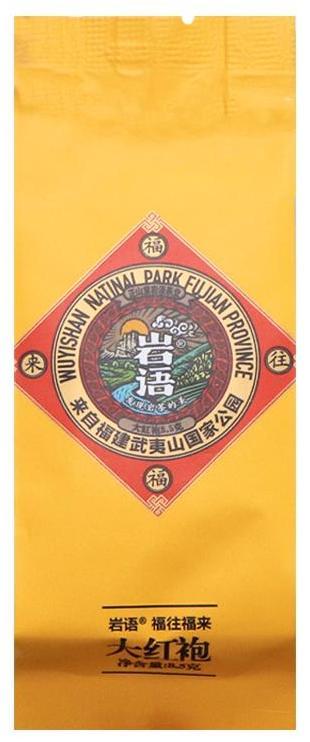
FuWangFuLai·Da Hong Pao |
 |
8.5g |
Light-Roast |
Floral fragrance obvious; Taste is sweet and refreshing. |
Wuyi Mountain Core Production Area |
|
Yan Xi·Da Hong Pao |
 |
8g |
High Roast |
Distinct charcoal scent, lasting floral-fruit fragrance on empty cup. |
Wuyi Mountain |
|
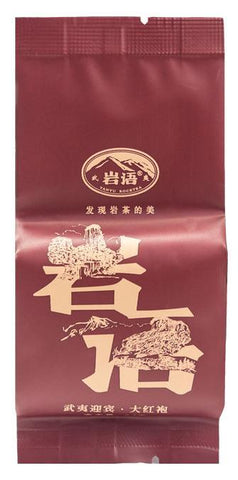
Ying Bin·Da Hong Pao |
 |
8.3g |
Medium-Roast |
Traditional Wuyi rock tea flavor; Charcoal aroma is obvious, slightly fresh and floral aroma;Taste mellow. |
Wuyi Mountain |
|
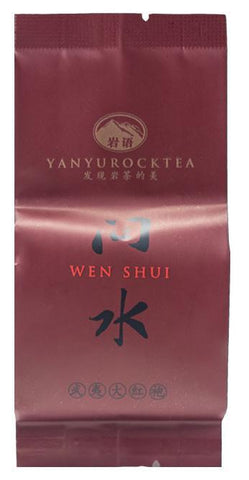
Wen Shui ·Da Hong Pao |
 |
8.5g |
Medium-high Roast |
Early Wuyi rock tea flavor; Rich charcoal,floral and fruity aroma; Taste mellow. |
Wuyi Mountain Core Production Area |
|
Organic Da Hong Pao |
 |
8g |
Medium-high Roast |
Charcoal aroma is obvious and the ripe fruit aroma is long-lasting; Taste is mellow and smooth. |
Wuyi Mountain |
|
Yuan Zheng·Da Hong Pao |
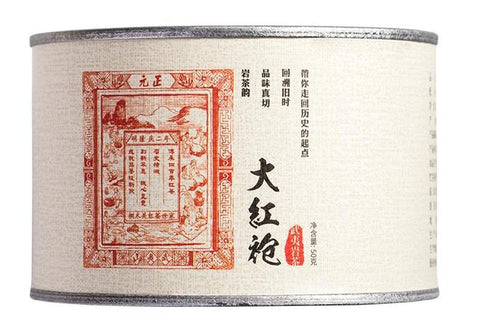 |
50g |
Light-Roast |
Orchid is fragrant; Taste is floral and fruity. |
Wuyi Mountain |
Product details
Product video
More about this product
The mystery of Wuyi rock tea
This guide explains the tea category and its background. For the contents, origin and preparation of this specific product, refer to the product details above.
The Mystery of Wuyi Rock Tea
Rock tea is known as the destination for tea drinkers.What exactly is it? How is it made? What kind of charm does it have?
Learn Now
Chinese Tea/Oolong Tea/Northern Fujian Oolong/Wuyi Rock Tea
FOR WUYI ROCK TEA& WUYI MOUNTAIN


The Zhengyan tea production area is approximately 72 square kilometers, so the tea produced is scarce and expensive.
What is Oolong Tea?
Oolong tea originated in the late Ming and early Qing dynasties. Its production process was invented by the people of Wuyi Mountain after thousands of trials and tribulations. It is the crystallization of collective wisdom. It first spread from Chong'an (now Wuyi Mountain City) to the tea area in northern Fujian (Anxi, Yongchun, Nan'an in Quanzhou and Zhangzhou, etc.), the Chaoshan tea area in Guangdong, and then spread to Taiwan. At present, China has formed four major oolong tea producing areas, namely northern Fujian oolong tea represented by Wuyi Rock Tea, southern Fujian oolong tea represented by Tieguanyin, Guangdong oolong tea represented by Fenghuang Dancong, and Taiwan oolong tea represented by Dongding Oolong. Wuyi Rock Tea is the ancestor of oolong tea, and Wuyi Mountain is the birthplace of oolong tea in the world.
What is Wuyi Rock Tea?
1. Wuyi rock tea is a product protected by geographical indications. Rock tea refers specifically to rock tea produced within the administrative area of Wuyishan City.2. Made using unique traditional rock tea processing technology.3. Oolong tea with rock-bone floral characteristics.
Why is it called Rock Tea?
The reason why rock tea is named "rock" is to emphasize the rocky landforms of Wuyi Mountain and the soil structure which is mainly weathered rock. This is the unique geographical condition given to Wuyi rock tea by the Creator, which cannot be easily replicated elsewhere. It is also an unavoidable condition for making a good cup of rock tea.
What is good Wuyi Rock Tea?
Wuyi rock tea is not famous for its exquisite appearance, but for its rich inner quality. From the perspective of production area, there are Zhengyan(Core region), Banyan(second grade region) and Zhoucha(normal region). Zhengyan tea is mellow in quality and is the best among rock teas. Banyan tea is tea grown on the edge of Wuyi, and its characteristics and taste are slightly inferior to Zhengyan tea. Zhoucha is tea grown on both sides of Wuyi, and its quality is lower. Sankeng Liangjian refers to the most representative mountain field in Zhengyan, which produces the best quality tea, and is also the area with the longest history of tea making in Wuyi Mountain Scenic Area. Is good tea from a good production area necessarily good? Not really. In addition to the production area, the quality of tea is closely related to the climate of the year, the craftsmanship of the tea maker, the picking and processing standards, the degree of roasting, the storage conditions, etc. Therefore, it is ultimately judged based on the taste of the tea.
What is the relationship between Da Hong Pao and Wuyi Rock Tea?
When talking about Wuyi rock tea, the first thing that comes to mind is Da Hong Pao. In fact, Wuyi rock tea refers to oolong tea produced in Wuyi Mountain, which belongs to the six major types of oolong tea. Da Hong Pao is actually just the name of a tree species, also known as Qidan. Because of its high popularity and representativeness, many people are accustomed to calling Wuyi rock tea Da Hong Pao. Nowadays, most Da Hong Pao teas are made by blending multiple types of rock tea, so they have rich aromas and varied tastes.
Is only the oolong tea produced in Wuyi Mountain considered Wuyi rock tea?
Yes. Only oolong tea produced in Wuyi Mountain is called Wuyi Rock Tea. The Wuyi Rock Tea Standard (GB/T18745-2006), a geographical indication product, which came into effect on December 1, 2006, clearly defines the scope of protection for Wuyi Rock Tea, a geographical indication product, which is the administrative area of Wuyi Mountain City, Fujian Province.
How to quickly distinguish good and bad rock tea?
At present, China does not have a set of standards to distinguish the quality of tea by packaging. It is indeed difficult to quickly distinguish and master the quality of each tea. There is no shortcut. We can roughly understand the flavor of tea through brand, production area, and variety, but in the end, we can only truly master the fragrance and taste of each tea from dry tea, tea soup, aroma, taste, and leaf bottom by drinking, tasting, and experiencing more over a long period of time.
lapsangstore Academy
How to Made Wuyi Rock Tea
1
Picking
The picking standard for rock tea is to pick one bud and three or four leaves when the buds and leaves are relatively mature, which is around April to May every year. They are not picked on rainy days or when there is dew. Due to the high humidity in Wuyi Mountain and the average annual temperature of around 18℃, the tea leaves are very tender even when they are mature and can be broken with a light lift.

2
Withering
Sun drying must be done on sunny days, so that the tea leaves can release a small amount of moisture in a short time. If the tea leaves cannot be dried in the sun, they will be placed in a withering building for heated withering.

3
Shaking and oxidation
The most important stage of rock tea production is to make the leaves collide and rub against each other through repeated shaking, which gradually damages the edges of the leaves. The leaves are then gradually oxidized to produce a green background with red edges, exuding a natural floral and fruity aroma, forming the unique floral and fruity aroma of oolong tea. The whole process takes 6-12 hours.

4
Stir-frying
Stir-frying is the sign of the end of the green tea making process. It is mainly to fix the quality of the green tea relatively, purify the aroma, and soften the leaves to facilitate rolling and shaping. The initial stir-frying time is 3 to 5 minutes

5
Rolling
Rolling and twisting are the main factors that shape the appearance of Wuyi Rock Tea and affect the tea production rate. In addition to making the tea strips tight, it can also increase the concentration of the tea soup.

6
Roasting
The roasting process is carried out in a closed bamboo cage in a roasting room. The roasting temperature must be well controlled, and the water must be removed quickly and promptly. After the refining process such as sorting, it needs to be roasted several times. The meticulous handling of the roasting process requires the experience of the tea making master. It often takes more than half a year to complete the production.
lapsangstore Academy
Why does Wuyi Rock Tea need to be roasted?
The characteristics of rock tea production and processing are seasonal production and year-round sales. The raw tea made from fresh leaves is not resistant to storage and must be roasted in the refining stage. During the roasting process, the long-term thermal action causes the transformation of substances. These substances not only directly participate in the formation of fragrance, but also further mature and purify the fragrance, making the various flavors of various rock tea varieties tend to be clear, elegant, and high. The taste tends to be rich and strong. The quality of rock tea is stable and resistant to storage.
lapsangstore Academy
The Different Area of Wuyi Rock Tea

Niulankeng (Bullpen)
The more important reason why Niulankeng is so valuable is its output. Surrounded by mountains on both sides, it forms a natural V shape. The pit bottom + cliff tea garden is only about 0.0467 km² , among which cinnamon variety is the most, but the annual output is only about 1,500 kilograms.

Shuiliandong(Water Curtain Cave)
The largest cave in Wuyi Mountain has two springs falling from the top of the cave all year round, forming a waterfall as high as 80 meters. The water vapor drifts around, nourishing the surrounding vegetation and forming a unique and moist valley environment. Therefore, the tea has a unique flavor, as fresh and refined as a fairy.

Jiulongke(Nine Dragons' Lair)
The mountain is long and narrow, with cliffs on both sides, winding and undulating, shaped like a nine-dragon nest, warm and humid, with high shade, forming a very typical mountain microclimate. The tea made is soft, elegant, refreshing and sweet.

Liuxiangjian(Aroma Flowing)
It is a cool gorge that can accommodate only one person. It was originally a nameless stream, but in the past it was called Daoshuikeng because it was connected to the stream of Daoshuikeng. When the Ming Dynasty poet Xu Bo visited this place, he renamed it Liuxiangjian. It is the origin of the famous bush "Buzhichun".

Sanyangfeng(Three peaks)
Sanyang Peak is the highest peak in Wuyi Mountain Scenic Area, with an altitude of 717.7 meters. The climate is cooler at higher altitudes, with clouds and fog in the morning and evening, and high humidity. The bitter ingredients such as "catechins" contained in tea are reduced, so the taste is thick and sweet.

Matouyan(horse's head)
The valley of Matouyan is steep and the rocky hill is open. The sunshine is moderate and abundant in summer, which makes the photosynthesis of tea trees stronger, increasing the content of aromatic substances and catechins in the new shoots, so the tea has a strong aroma and astringency.
lapsangstore Academy
Common Tea Tree Varieties of Wuyi Rock Tea

Da Hong Pao
There are six tea trees on the cliff of Jiulongke with the words "Dahongpao" engraved on them. They are three tea varieties: Qidan, Beidou, and Queshe. This is the mother tree Dahongpao. It is no longer picked and sold.Later, the people of Wuyi Mountain adopted agricultural technology to breed and cultivate Dahongpao tea trees, and have bred enough to supply the market.But as for the common commodity called "Dahongpao", it is the product of the numerous tea varieties in Wuyi Mountain. After the fresh leaves are picked and made into tea, they are piled according to their quality conditions and scientifically and rationally blended into a product called Dahongpao. Therefore, the fragrance is rich and the taste is varied.

Narcissus | Rou Gui
As the saying goes, "Nothing is more fragrant than Rougui, and nothing is more mellow than narcissus." In addition to the influence of the mountain field, the tea tree species will also affect the taste of the tea soup. Wuyi cinnamon is a shrub tea tree species, and the plant height is generally 1.5m. The aroma is sharp and the cinnamon aroma is obvious. The best ones have a milky taste. Wuyi narcissus is a small tree tea tree species, which is taller and has a unique orchid fragrance, mellow and fresh. In addition, there are hundreds of varieties with different styles in Wuyi Mountain, but because of the small output, although some are sold separately on the market, most of them are used as blending raw materials for Dahongpao, and are blended into Dahongpao products and sold on the market.

lapsangstore Academy
Get Basic Knowledge About Chinese Tea
LAPSANGSTORE'S ROCK TEA
FIND YOUR SUITABLE FROM BEST CORE AREA


Yanjie·Shui Xian - Orchid Aroma Wuyi Rock Tea Gift Box[YT07]
Authentic Wuyi Shui Xian
From
$19.00 USD
$20.00 USD


WenShui Premium Narcissus问水水仙 Wuyi Rock Tea 204g Gift Box[RT02]
$100.00 USD
$110.00 USD


