
Left Continue shopping
Your Order

You have no items in your cart

You might like

Yanjie Rou Gui · Cinnamon Aroma Wuyi Rock Tea

A lively Wuyi oolong with cinnamon-like spice, floral-fruity layers and a full, sweet finish. Choose a 17g tasting set or 51g gift box; each individual sachet contains 8.5g.

$25.00 USD
Tax included. Shipping calculated at checkout.

Yanjie · Wuyi Rock Tea

A closer look at this tea

Yanjie · Rou Gui — packaging presentation

The tea at a glance

Tea type
Wuyi rock tea · oolong
Cultivar
Rou Gui
Origin
Wuyishan, Fujian, China
Pack formats
17g tasting set / 51g gift box
Per sachet
8.5g
Roast
Slow medium-fire charcoal roast
Water temperature
Around 100°C / 212°F
Storage
Sealed, dry, dark and away from strong odours.

A gift to open and share

Red and black packaging echoes Wuyi’s mountain landscape. The sachets make it easy to prepare one session at a time, or to share the tea with friends. Select the tasting set or gift-box format that suits the occasion.

Yanjie · Rou Gui — open gift-box presentation

Selected through five tasting criteria

Blind tasting looks at the dry leaf, liquor, aroma, taste and infused leaf. Samples are assessed over successive rounds to find a balanced expression of the tea’s style.

Yanjie · Rou Gui — dry tea leaves

Rooted in the Wuyi landscape

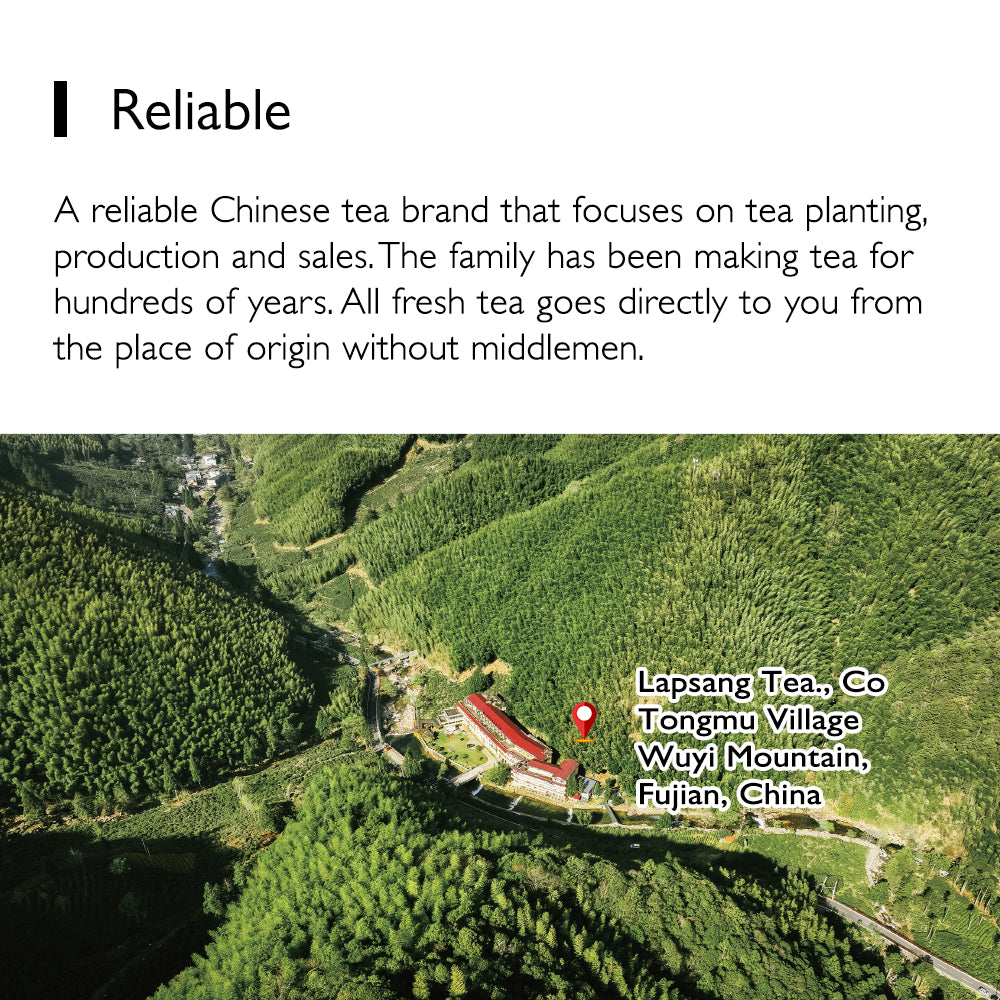
This tea comes from Wuyi Mountain’s core rock-tea growing region in Fujian. The Danxia landscape combines cliffs, ravines and loose, weathered gravel soils. Site, cultivar and the tea maker’s work all contribute to the character in the cup.

Explore Wuyi rock tea
Yanjie · Rou Gui — tea bushes in the growing area

Green-making, then a slow roast

Traditional Wuyi processing adapts the green-making stage to the day’s conditions, followed by measured rolling and a slow, medium-fire charcoal roast. Careful heat control brings the roast and the cultivar’s own aromas into balance.

Yanjie · Rou Gui — tea maker working with roasting baskets

The gift-box presentation

The gift box contains three small boxes, each holding two individually sealed 8.5g sachets: six sachets, 51g in total. A mountain-shaped outer sleeve, a book-style opening and textured details give the presentation a distinctly Wuyi character. A separate two-sachet, 17g tasting set is also available.

Yanjie · Rou Gui — open gift-box presentation

Spice, flowers and a lingering sweetness

  • Aroma: floral, fruity and cinnamon-like notes, with a lingering milky sweetness.
  • Liquor: bright deep orange-yellow.
  • Palate: a floral opening, a full mellow body and a clear spicy impression, followed by sweetness.
Yanjie · Rou Gui — dry tea leaves
Yanjie · Rou Gui — tea liquor in a tasting cup
Yanjie · Rou Gui — infused leaves in a gaiwan

From fresh leaf to aroma

Follow the early stages of traditional Wuyi rock tea making: fresh leaves carried from the garden, spread out to wither, and shaken to develop aroma.

Yanjie · Rou Gui — Fresh tea leaves carried from the garden in bamboo baskets
Yanjie · Rou Gui — Fresh tea leaves spread on bamboo trays to wither
Yanjie · Rou Gui — Shaking tea leaves in a bamboo tray

Fixation, rolling and roasting

Heat fixation controls oxidation, rolling shapes the leaves, and roasting develops the finished tea. The charcoal fire is carefully tended so the roast supports the tea’s texture and aromatic layers.

Yanjie · Rou Gui — Heat fixation of Wuyi oolong tea leaves
Yanjie · Rou Gui — Hand rolling tea leaves on a bamboo tray
Yanjie · Rou Gui — Tea maker tending roasting baskets
Yanjie · Rou Gui — charcoal fire for traditional roasting

Explore the Wuyi landscape

Shaded tea gardens, sheer cliffs and narrow ravines are part of Wuyi’s varied landscape. Niulankeng, Shuiliandong, Jiulongke, Liuxiangjian, Sanyangfeng and Matouyan are familiar place names in the world of rock tea.

Yanjie · Rou Gui — Niulankeng
Niulankeng
Yanjie · Rou Gui — Shuiliandong
Shuiliandong
Yanjie · Rou Gui — Jiulongke
Jiulongke
Yanjie · Rou Gui — Liuxiangjian
Liuxiangjian
Yanjie · Rou Gui — Sanyangfeng
Sanyangfeng
Yanjie · Rou Gui — Matouyan
Matouyan

The cultivar shapes the cup

Shui Xian is often appreciated for orchid notes and a full, mellow texture. Rou Gui brings a more pronounced cinnamon-like spice. Da Hong Pao includes a range of Wuyi rock tea expressions and blends. Comparing them is one way to discover your preferred style.

Yanjie · Rou Gui — cliff and tea bushes at Jiulongke
Yanjie · Rou Gui — tea-tree branches and leafy canopy
Yanjie · Rou Gui — tea bushes in a narrow rocky ravine

Understanding Wuyi’s growing areas

Wuyi rock tea is an oolong from Wuyishan, Fujian. Names such as Zhengyan, Banyan and Zhoucha describe growing areas. Origin matters alongside cultivar, processing, roasting and storage; the cup remains the best guide to the tea you enjoy.

Yanjie · Rou Gui — illustrated map of Wuyi growing areas
Yanjie · Rou Gui — diagram of Wuyi regional terminology

A starting point for gaiwan brewing

Preheat a gaiwan or small teapot and begin with about 8g of tea. Use freshly boiled water at around 100°C / 212°F. Decant the first four infusions promptly; try 5–10 seconds for the next few, then around 15 seconds as the flavour softens. Adjust the leaf amount and timing to your vessel and taste.

Questions about this tea

Does Rou Gui mean cinnamon is added?

Rou Gui is a tea cultivar used for Wuyi oolong. Its name and cinnamon-like tasting note describe its characteristic aroma, rather than an added spice.

What is the difference between the two packs?

The 17g tasting set contains two 8.5g sachets. The 51g gift box contains six 8.5g sachets, arranged in three small boxes. Choose the format in the product options before ordering.

What does “rock bone” mean?

It is a tasting expression for the structure, depth and lasting finish of Wuyi rock tea. Pair the aroma with the texture of the liquor and the sweetness that remains after swallowing.

How should I store an opened pack?

Keep the tea sealed at room temperature in a dry, dark place away from strong odours. Open an individual sachet when you are ready to brew it.

How many infusions can I make?

The number depends on leaf amount, vessel size, water temperature and your preferred strength. Use short early infusions, extend gradually and keep brewing while you enjoy the flavour.

Rou Gui: selection, terroir and making

Rou Gui from flowers and fruit to cassia spice

Rou Gui grows in Wuyi’s rocky ravines. The producer reads the weather during green-making, rolls the leaf with restraint, then watches a slow, medium charcoal roast. The aim is to carry the lively floral and fruit aromas into the finished tea while bringing the cultivar’s characteristic cassia fragrance forward.

The liquor is bright and deep orange-yellow. Begin with the floral opening, follow the full, mellow body, and look for a stronger cassia-like spice and a lingering, milky sweetness after the sip. A second taste as the cup cools makes the transitions easier to pick out.

Five observations in a blind tasting

Samples are assessed anonymously over successive rounds. The tasters look for a balanced expression of the tea’s style across five observations. You can use the same sequence at home.

  • Dry leaf: compare the shape, colour and evenness of the strips.
  • Liquor: observe brightness, hue and clarity.
  • Aroma: compare what comes from the hot cup with what remains as it cools.
  • Taste: pay attention to body, texture and the finish after swallowing.
  • Infused leaf: spread it out to compare thickness, softness and evenness.

Three Wuyi sites: pits, cliffs and springs

  • Niulankeng. The slopes on either side form a narrow V. Gardens run along the floor and up the cliff sides, where the limited planting space helps explain the site's reputation for scarce Rou Gui.
  • Shuiliandong. Springs spill from the rock above Water Curtain Cave. Spray and shade keep the surrounding valley vegetation lush. Local tasting descriptions often emphasise fresh, clear aromas.
  • Jiulongke. The long, winding passage runs between steep cliffs. The enclosed, humid setting is associated with soft, clean and gently sweet styles.

Three Wuyi sites: streams, high ground and open slopes

  • Liuxiangjian. This cool, narrow stream valley connects with Daoshuikeng. Local tradition links its name, the Gorge of Flowing Fragrance, with the Ming poet Xu Bo. It is also associated with the named tea Buzhichun.
  • Sanyangfeng. The high ground is cool and often misty. Full, sweet liquor is a useful tasting reference for the site.
  • Matouyan. Steep gullies cut into relatively open rock slopes. The gardens get more light than the deep pits. Aromatic intensity and a firmer grip can be useful comparisons when tasting its teas.

Picking, withering and green-making

  1. Picking. A traditional spring picking standard is one bud with three or four leaves once they are sufficiently developed, usually around April or May. Makers avoid picking in rain or while dew is still on the leaves.
  2. Withering. The fresh leaves are laid out so some moisture can escape and the leaf becomes supple. On suitable days the leaves are withered in the sun. When conditions are unsuitable, a withering room and controlled warmth can be used.
  3. Green-making. Repeated shaking alternates with resting. The moving leaves gently bruise one another at the edges. As partial oxidation progresses, reddish edges and floral or fruity aromas begin to emerge. Tea makers adjust the work to the weather and the condition of the leaf.

Fixation, rolling and the reason for roasting

  1. Fixation. High heat stops enzymatic oxidation once the tea maker judges that the aroma has developed enough.
  2. Rolling. Working the softened leaves into tight strips gives rock tea its shape and affects how quickly the liquor develops in the pot.
  3. Roasting. After drying and sorting, the tea may be roasted in several rounds. Heat and rests between rounds help reduce residual moisture and develop the aroma and body. A carefully judged roast brings the cultivar’s aromas into balance.

Roasting helps prepare a spring-made tea for storage throughout the year. Taste the finished tea again as the liquor cools to see how the warm roast, floral or fruit notes, and texture come together.

Compare cultivars and growing areas in the cup

Rou Gui often shows an assertive cassia-like fragrance. Shui Xian is known for a mellower body with orchid-like fragrance. Da Hong Pao has a historic association with the mother-tree site at Jiulongke and is also used for commercial Wuyi rock teas blended to a particular aromatic style.

Zhengyan, Banyan and Zhoucha describe different growing settings. The site is one part of the comparison. Harvest, cultivar, green-making, roast and storage all influence the finished cup. Look at the twisted dry leaf, the brightness of the liquor, the aroma, the texture and the infused leaf across several rounds.